

Dendrotonics - The Bayanihan Blog
Thought Leadership: Agarwood’s Multimillion-peso Potential and Role in Biodiversity Restoration
A commentary of the Manila Bulletin Agriculture article written by Pam Pascual posted last Feb 17, 2026

Bamm Lasquety
Technologist and coffee-powered code whisperer
agarwoodmultimillionpesopotentialbiodiversityrestorationbiodiversitymanilabulletinagriculturethought leadershipcommentary
Published 24 Jul 2026
Last modified Updated 20 Jul 2026
5 min read
Reacting to Manila Bulletin: What "Multimillion-Peso Agarwood" Actually Takes on the Ground
Dendrotonics is grateful for the recent article feature on agarwood published on the Manila Bulletin Agriculture website. It highlights the investment potential of agarwood, and it also prompts us to share deeper insights about the realities of cultivating this valuable resource and emerging industry.
When Manila Bulletin Agriculture published Pam Pascual's feature on agarwood's investment potential in February 2026, the response was overwhelming. While we appreciate being referred to as "liquid gold" and value Dr. Ephraim Cercado's recognition, a 700-word article can only scratch the surface. The figure that garnered the most attention — a ₱3M investment potentially turning into ₱40M in five years — warrants further exploration, particularly for those who manage the plantations.
"Through planting agarwood, Filipinos can become multimillionaires and achieve financial freedom earlier in life." — Dr. Ephraim Cercado, quoted in Manila Bulletin Agriculture, Feb 17, 2026. Read the original feature here.
This quote is genuine, and Doc Em stands by it. However, the word "can" carries significant weight, and it’s crucial for prospective growers to understand the full context before planting a single seedling.
Where the ₱3M → ₱40M Number Actually Comes From
The newspaper presented an optimistic ceiling. Here’s the arithmetic behind it, along with the assumptions necessary for its validity:
- Planting Density: Our compression technique allows for up to 6,500 trees per hectare, compared to conventional methods, which typically yield fewer. This density is crucial for maximizing returns and relies on precise spacing protocols and inoculation schedules.
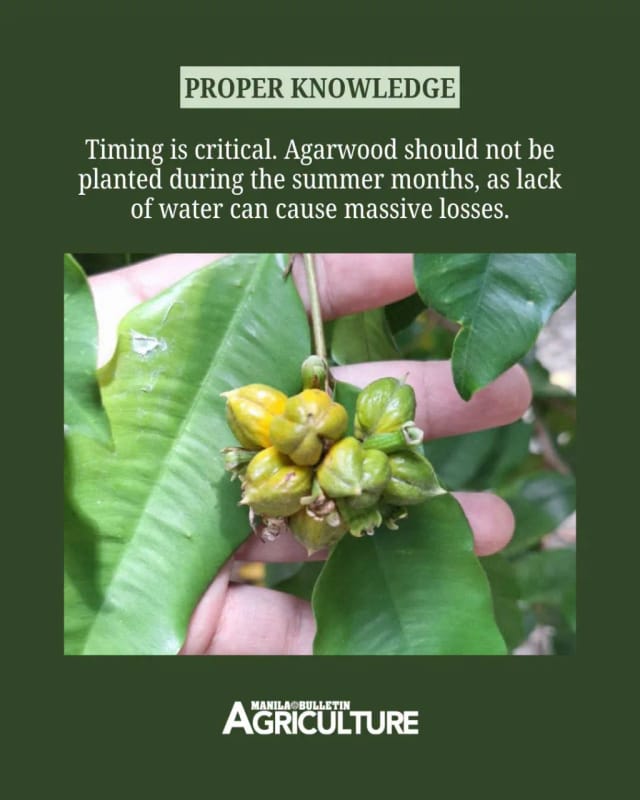
- Time to First Harvest: We typically see our first inoculation-driven harvest within three years, in contrast to the 7-12 years commonly found in wild or conventionally grown agarwood. Field observations indicate a range of about 2.5 to 4 years under optimal conditions and due to our fast-growth technology.
- Grade and Price Realization: The eye-popping per-kilo prices apply only to top-grade resinous wood. Not every tree yields this grade. A realistic model must account for a mix of grades — typically 30% top grade, 50% mid-grade, and 20% low grade — rather than assuming every kilo fetches the highest price found in Middle Eastern markets.
In straightforward terms: ₱40M represents the most optimistic scenario, not the expected outcome. We encourage you to plan for a more conservative approach and you'll be pleasantly surprised.
Insights from the Article: Strengths and Gaps
Pascual's piece accurately captured several key points: the strong and enduring demand for agarwood, its compatibility with biodiversity restoration, and the necessity of legal compliance. All of these are true.
However, we want to add more finer details that separate a successful plot from failure:
- Inoculation is the Whole Ballgame: A healthy Aquilaria tree alone does not equate to agarwood. The resin forms only through a carefully controlled wounding and inoculation process. Missteps can render your tree little more than a decorative shade provider. This is the area we invest the most time teaching, yet it often gets overlooked in "get rich" narratives. One lesson learned from our recent trials involved an inoculation technique that initially failed due to improper timing, emphasizing the importance of precise execution.
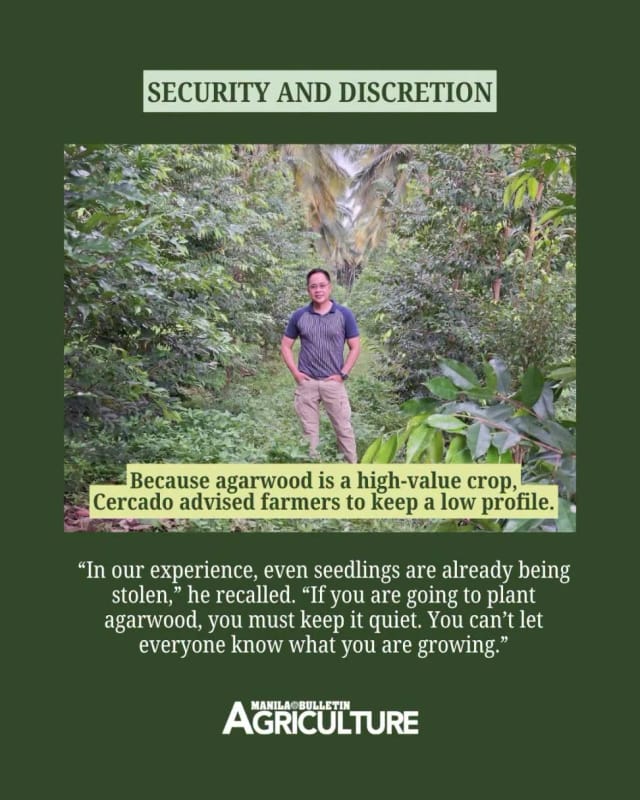
- Theft and Discretion are Real Operational Costs: The article mentioned maintaining a low profile. In practice, this includes implementing proper fencing, hiring trustworthy help and security guards, investing in CCTV monitoring systems early, fostering community relationships, and avoiding geo-tagging plots. High-value crops attract attention, and taking precautions is essential.
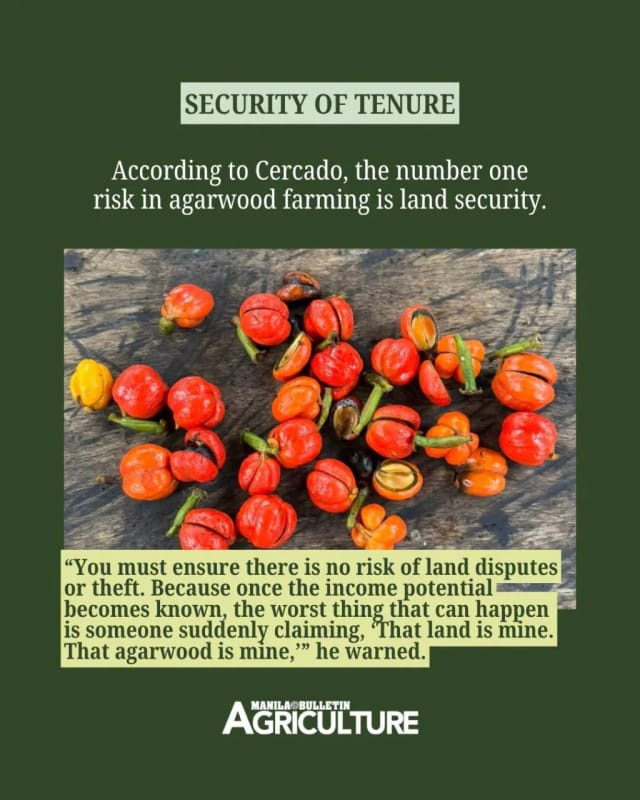
- Land Tenure Disputes End More Projects Than Pests Do: Secure a clear title before planting a five-year crop. There have been cases encountered where a partner halted due to a land dispute with neighboring farmers, underscoring the importance of establishing clear ownership.
Our Actual Advice to a First-Time Grower
If you read the Manila Bulletin piece and felt a spark of excitement, that’s fantastic — the opportunity is real. However, before you invest:
- Secure clear land tenure.
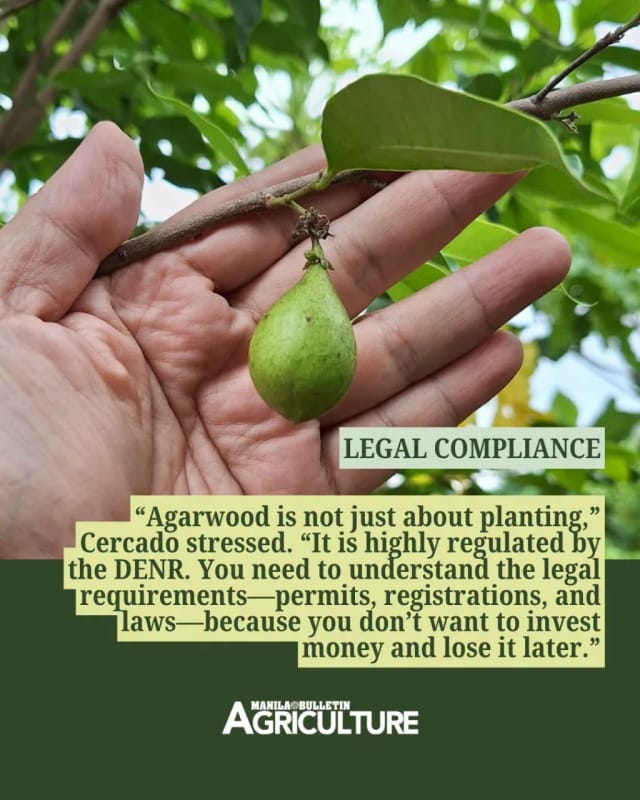
- Ensure your DENR permits are in order.
- Start smaller than you initially think you should.
- Treat inoculation as a skill to be developed, rather than a step to be outsourced. Growers who struggle often chase the ₱40M headline and neglect the fundamentals.
At Dendrotonics, we support partners throughout the entire value chain — from seedlings and permits to inoculation and market access — because getting any one of these steps wrong can jeopardize overall returns. If you’d like a realistic projection of numbers tailored to your specific site, we invite you to reach out to our team through our different official channels or through the Contact Us button.
Conclusion
Agarwood cultivation represents a unique intersection of economic opportunity and environmental stewardship. Under the leadership of visionary advocates like Dr. Ephraim Cercado, Dendrotonics Corporation is paving the way for sustainable development in the Philippines. By embracing agarwood, we not only invest in a lucrative future for Filipinos, but also contribute to the restoration and preservation of our country's biodiversity.
Source and picture credits: Pam Pascual, "Agarwood's multimillion-peso potential and role in biodiversity restoration," Manila Bulletin Agriculture, Feb 17, 2026. This post includes our commentary on a short excerpt from the original article; the full article can be accessed through the link above. All analysis, figures, and field notes contained herein are solely those of Dendrotonics.
Bamm Lasquety
Technologist and coffee-powered code whisperer
About the author
Bamm Lasquety is an IT professional and consultant at Dendrotonics, where he aims to combine agarwood cultivation, farmer empowerment, and native tree biodiversity with the latest AI, IoT, and digital sensor technology into agrotech. As a seasoned IT veteran, he builds and maintains the digital backbone of the business - from web infrastructure to data systems - bringing an engineer's eyes to sustainable farming while writing about agarwood, native trees, and what happens when a programmer wanders into the world of agriculture and nature.
Related articles



Is Agarwood Farming Really Profitable in the Philippines?
A lot of people are curious—and a bit skeptical—about agarwood farming. Is it truly a sustainable and profitable venture? Is it actually legit, or just another too‑good‑to‑be‑true promise?
Spotting Genuine Agarwood: A Buyer's Essential Guide to Avoiding Fakes
Learn how to identify real agarwood and avoid counterfeit products with our comprehensive buyer's guide.