
Dendrotonics - The Bayanihan Blog
Is Agarwood Farming Really Profitable in the Philippines?
A lot of people are curious—and a bit skeptical—about agarwood farming. Is it truly a sustainable, profitable venture? Is it actually legit, or just another too‑good‑to‑be‑true promise?

Bamm Lasquety
Technologist and coffee-powered code whisperer
agarwoodagarwood farmingroiprofitabilitylegitrevenue
17 Jul 2026
8 min read
Is Agarwood Farming Really Profitable in the Philippines?
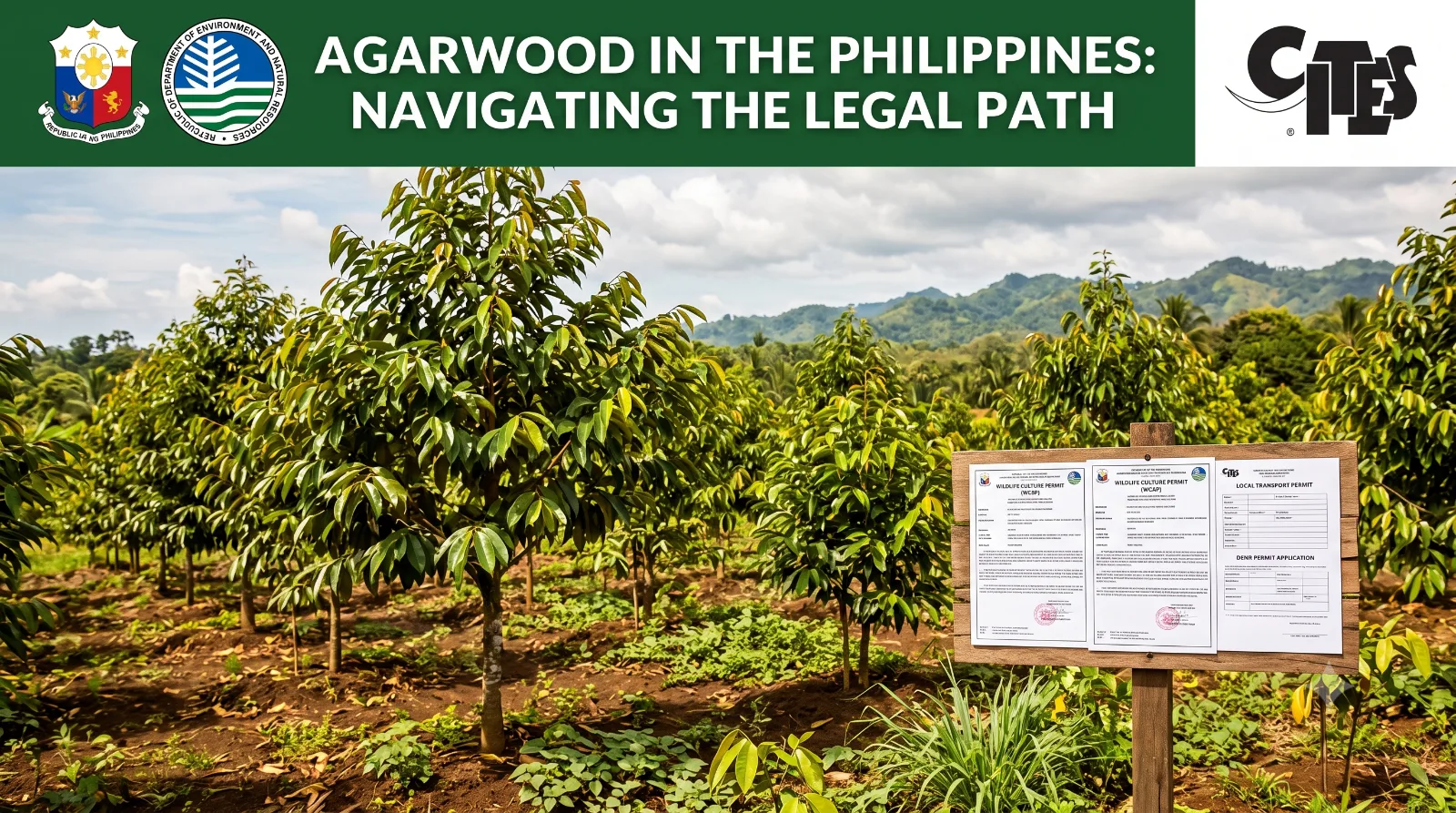
Agarwood farming is increasingly recognized as a lucrative opportunity for investors, landowners, and environmental advocates across the Philippines. Renowned for its aromatic heartwood, agarwood—commonly known as ‘oud’—is one of the world’s most sought-after raw materials, highly valued for its applications in incense, perfumery, and traditional medicine. But is agarwood farming genuinely profitable? This article delves into the potential of this venture while addressing the challenges involved.
The Market Potential of Agarwood – Too Good to Be True?
Often referred to as "liquid gold," the agarwood market is experiencing remarkable growth. The global market value of agarwood is estimated at $32 billion (Grosskopf et al., 2023). Demand has escalated in recent years, especially in the Middle East and Asia, where agarwood is integral to luxury perfumes and religious ceremonies.
Market research indicates that the global agarwood market was valued at approximately $6 to $8 billion in recent years (Zhang et al., 2022). Projections suggest a compound annual growth rate (CAGR) of around 8% through 2027 (Smith & Lee, 2021), driven by increasing consumer interest in natural products and the rising demand for organic materials. Conservative estimates indicate that the agarwood industry could reach an $11 billion valuation by 2031.
In the Philippines, industry experts predict that the local agarwood sector could evolve into a multi-hundred-million-dollar market by the late 2020s, supported by growing domestic demand and steady export interest (Sy, E.Y. & Melgar, 2022). Well-managed plantations report potential revenues per hectare ranging from tens of millions to low hundreds of millions of pesos per harvest, heavily influenced by tree health, inoculation success, and market grade. Local prices for agarwood chips range from PHP 40,000 to 300,000 per kilogram.
The agarwood industry presents “great potential for sustainable agricultural development” and global market opportunities, with improved inoculation technologies significantly increasing yield and uniformity (Turiano, 2025). Agarwood can command extremely high prices, sometimes exceeding gold per kilogram (Adhikari et al., 2021). Both Turiano and Adhikari emphasize that sustainable cultivation of agarwood is essential to combat overharvesting and protect threatened species, rather than extractive practices.
For smaller or emerging farms, even conservative estimates based on lower-grade agarwood prices indicate that per-hectare gross revenues may lie within the mid-tens-of-millions-peso range. Factors such as tree density, resin formation, grading outcomes, and buyer negotiations contribute to this figure, which remains substantially higher than typical earnings from most high-value crops, underscoring agarwood’s unique economic potential when managed responsibly.
Real Returns from Agarwood Farming
The financial prospects of agarwood farming are promising. Farmers in Southeast Asia have reported earnings of up to $100,000 per hectare after 7 to 10 years of cultivation (Tan, 2022).
For those contemplating a 1-hectare plantation, here’s a structured overview of the estimated costs associated with launching this venture through Dendrotonics:
- Seedlings: A minimum of 833 agarwood seedlings per hectare is required for profitability (up to 6,500 seedlings using Dendrotonics' compression technology) at an average market price of ₱360-515 each, totaling ₱299,880-364,437.
- Additional costs (labor, consultancy fees, irrigation infrastructure, DENR registration, inoculants) will bring total expenditures to an estimated ₱700,000-900,000.
A notable advantage of partnering with Dendrotonics is its cost-effective, Filipino-made inoculation services. The price for inoculants at Dendrotonics is just ₱300,000 for 1,000 trees—₱300 per tree at ₱100 per liter—significantly lower than competitors such as Oudino at ₱13,500 per tree (₱4,500 per liter), Witsawa at ₱10,500 per tree (₱3,500/pack), and PROVE-N1 at ₱7,500 per tree (₱2,500/liter) (Dendrotonics, 2023).
| Inoculant Providers | Cost per Tree | Total Cost for 1,000 Trees |
|---|---|---|
| Dendrotonics | ₱300 | ₱300,000 |
| Oudino | ₱13,500 | ₱13,500,000 |
| Witsawa | ₱10,500 | ₱10,500,000 |
| PROVE-N1 | ₱7,500 | ₱7,500,000 |
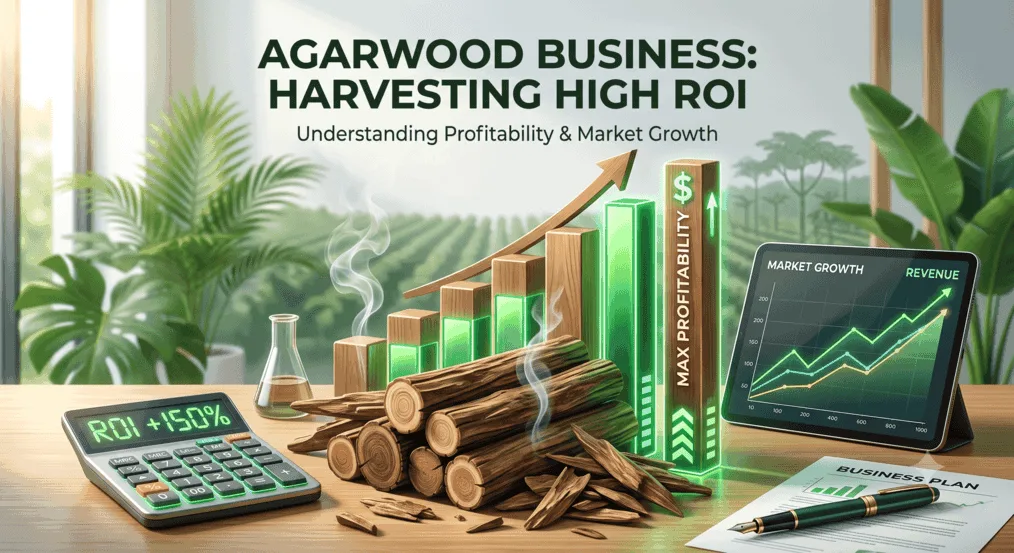
This cost advantage positions Dendrotonics as a technical and commercial leader in agarwood inoculation, strengthening the financial viability of grower ventures while enabling the production of consistently high‑grade resin—a result typically associated with advanced induction protocols and long-term silvicultural expertise. Philippine studies with DENR show that plantations with structured inoculation programs, proper species selection (Aquilaria malaccensis, A. crassna, A. filaria), and disciplined post‑induction monitoring can achieve exceptionally strong financial performance, with net returns on investment commonly estimated between 125% and 150% for mature, well-managed blocks (ERDB, 2018). This aligns with local market analyses documenting high domestic and export demand, premium pricing for authenticated resin, and the profitability of scientifically guided agarwood farming in the Philippines.
Risks and Challenges in Agarwood Farming
While the profit potential is enticing, a realistic assessment of the landscape is essential. Here are some challenges that aspiring farmers may face:
1. Long Maturation Period
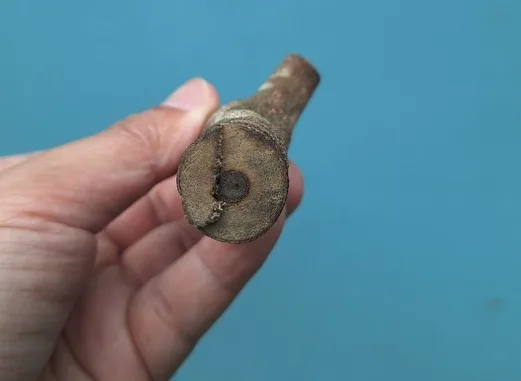
Agarwood trees can take between 7 and 15 years to mature before producing the valuable heartwood. This lengthy waiting period can be challenging for those seeking quick returns. However, Dendrotonics' fast-growth technology can help accelerate returns and yield rates.
2. Environmental Factors
Agarwood trees, especially those at the sapling stage, are sensitive to environmental conditions and flourish only in specific climates. Natural disasters, pests, and diseases can adversely affect crop yields.
3. Initial Investment
Establishing an agarwood farm necessitates a considerable initial investment in both land and resources, which can pose a barrier for many aspiring farmers.
Social Proof: Success Stories and Use Cases
Despite the regulatory and technical challenges surrounding agarwood cultivation, numerous Filipino farmers, cooperatives, and community-based organizations have already demonstrated that scientifically guided agarwood farming can yield substantial economic and ecological benefits. These early adopters provide compelling social proof for newcomers entering the industry.
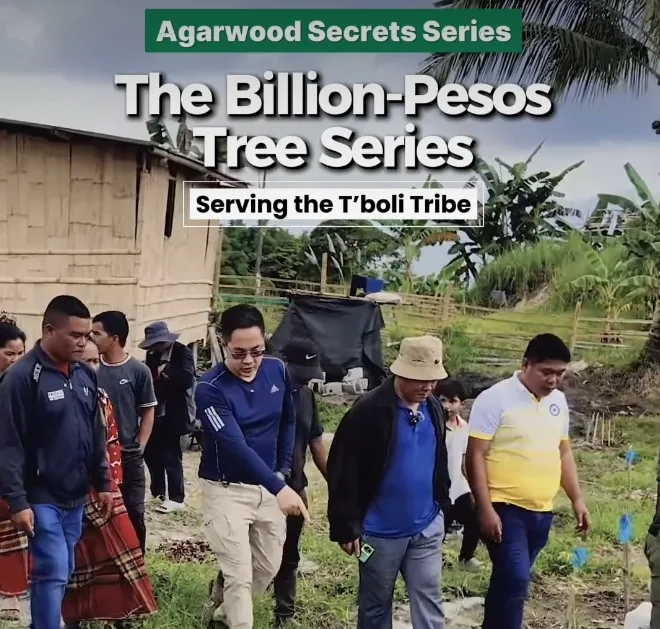
One notable example is a Mindanao-based cooperative that has integrated Aquilaria cultivation into its agroforestry systems while establishing direct relationships with international buyers to secure fair pricing and long-term market access. Their work mirrors findings from Philippine forestry studies showing that community-led agarwood initiatives can enhance household incomes, strengthen rural economies, and promote sustainable resource management (Monteclaro et al., 2021; Sy & Melgar, 2022). By adopting structured inoculation protocols and transparent trade practices, the cooperative demonstrates how local growers can participate ethically and profitably in the global agarwood value chain.
In addition, several Philippine NGOs and environmental organizations collaborate with farmers to implement sustainable agarwood cultivation practices. These groups provide training on species selection, artificial inoculation, nursery management, and compliance with CITES and DENR regulations—interventions consistent with recommendations from the Ecosystems Research and Development Bureau (ERDB, 2018; ERDB, 2020). Such partnerships help landowners increase productivity while minimizing ecological impacts, aligning with broader conservation goals and reinforcing the role of agarwood agroforestry as a viable livelihood strategy in rural communities.
Final Thoughts: A Balanced Perspective
So, is agarwood farming truly profitable in the Philippines? The answer remains both yes and no. The potential for high returns is undeniable—supported by local studies showing strong market demand, premium pricing, and the viability of Aquilaria cultivation under Philippine conditions (Monteclaro et al., 2021; Sy & Melgar, 2022). Yet profitability is never automatic. Success demands discipline, patience, and a willingness to master the complexities of this emerging sector. This is especially true for Lapnisan (Aquilaria malaccensis), a species known for its delicate early growth phase and sensitivity during its first three years, as documented in ERDB inoculation and propagation trials (ERDB, 2018; ERDB, 2020).
Coupled with the high costs of resin induction and the technical learning curve required to achieve consistent results, Filipino growers must navigate a landscape that rewards expertise rather than shortcuts. Agarwood farming is not merely planting trees—it is entering a long-term partnership with biology, markets, and time.
For those beginning this journey, thorough research, mentorship from seasoned growers, and a well-structured business plan are essential. The path may be lengthy, but with the right strategy, agarwood cultivation can evolve into both a profitable enterprise and a meaningful contribution to environmental restoration and sustainable agroforestry.
Obstacles will always exist, but they are not barriers—they are teachers. Farmers who embrace these challenges with curiosity and resilience often emerge not just successful, but transformed, especially in such a new industry as agarwood cultivation.
And perhaps that is the real promise of agarwood farming: not just the creation of something valuable for the international market or as a prized export commodity, but the cultivation of people willing to grow just as boldly as the trees they plant - people who deepen their connection to cultural diversity, embrace the richness of their own Philippine native flora, and carry forward a renewed appreciation for our own native forests. In choosing this path, farmers do more than build livelihoods; they become stewards of knowledge, advocates for conservation, and resilient pioneers ready to seize the rising opportunities of the rising agarwood industry.
Padayon!
References
Adhikari, S.R., Pokhrel, K., & Baral, S.D. (2021). Economic Value of Agarwood and Its Prospects of Cultivation. International Journal of Applied Sciences and Biotechnology, 9(1), 23–31.
Dendrotonics. (2023). Competitive pricing analysis of agarwood inoculation services.
ERDB (2020). Artificial Inoculation Trials for Aquilaria Species in Luzon and Mindanao.
Grosskopf, E. K., Simmonds, M. S. J., & Wallis, C. J. (2023). Combining Near-Infrared (NIR) Analysis and Modelling as a Fast and Reliable Method to Determine the Authenticity of Agarwood (Aquilaria spp.). Analytica, 4(2), 231–238. https://doi.org/10.3390/analytica4020018
Gutiérrez, S., Overmans, S., Wellman, G. B., et al. (2024). A synthetic biology and green bioprocess approach to recreate agarwood sesquiterpenoid mixtures. Green Chemistry, 26, 2577–2591. https://doi.org/10.1039/d3gc03708h
Mindanao Cooperative. (2023). Success stories in sustainable agarwood farming.
Monteclaro et al. (2021) — Philippine Journal of Science
Smith, J., & Lee, A. (2021). Global agarwood market report. Economic Insights Journal, 29(3), 45-67.
Sy, E.Y. & Melgar, A.G.B. (2022). The Online Agarwood Trade and Seizure Analysis in the Philippines. Journal of Nature Studies, 22(2), 12–26.
Tan, M. (2022). Financial returns from agarwood farming in Southeast Asia. Journal of Agricultural Economics, 54(2), 89-102.
Turiano, P. (2025). Potentials and Opportunities in the Agarwood Industry. Aloysian Interdisciplinary Journal of Social Sciences, Education, and Allied Fields, 1(4), 155–162.
Zhang, Z., Meng, X., Ran, J., et al. (2022). Fusarium oxysporum infection-induced formation of agarwood (FOIFA): A rapid and efficient method for inducing the production of high-quality agarwood. PLOS ONE, 17, e0277136. https://doi.org/10.1371/journal.pone.0277136
Bamm Lasquety
Technologist and coffee-powered code whisperer
About the author
Bamm Lasquety is an IT professional and consultant at Dendrotonics, where he aims to combine agarwood cultivation, farmer empowerment, and native tree biodiversity with the latest AI, IoT, and digital sensor technology into agrotech. As a seasoned IT veteran, he builds and maintains the digital backbone of the business - from web infrastructure to data systems - bringing an engineer's eyes to sustainable farming while writing about agarwood, native trees, and what happens when a programmer wanders into the world of agriculture and nature.
Related articles